OTTO DIX

Otto Dix is looking at us; unsentimental, unflinching, compassionate and intensely humane, his features engraved with the knowledge of the worst that we are capable of doing to each other.
Born in 1891 in Gera-Untermhaus, Germany, Dix, like many young men of his generation, signed up at the outset of WW1, and fought on the Western Front at Champagne, Artois and the Somme before being transferred to the Eastern Front and, eventually, the doomed Spring Offensive of 1918.
His series of fifty etchings, Der Krieg, recording his experience of trench warfare, stand with Goya’s, Los Desastres de La Guerra, and Callot’s Les Grandes Miseres de La Guerre, as some of the most powerful warnings from history ever created by an artist from personal experience.
(Click images for lightbox)
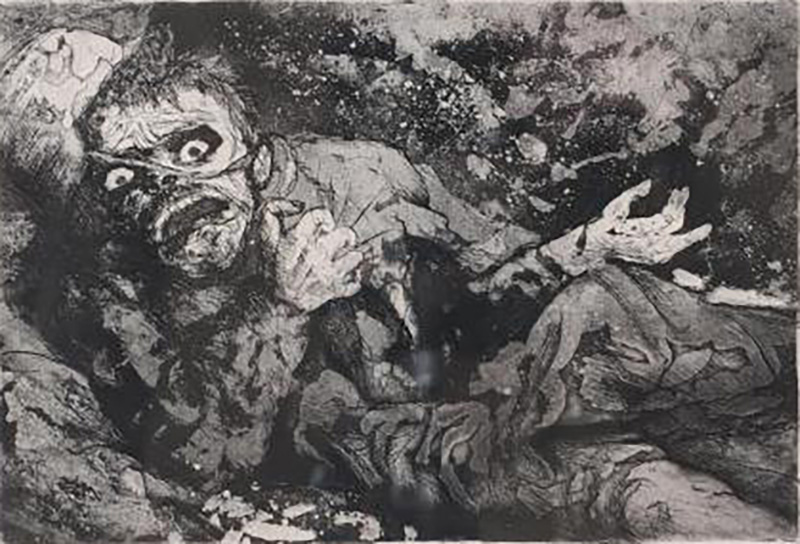
Wounded man.
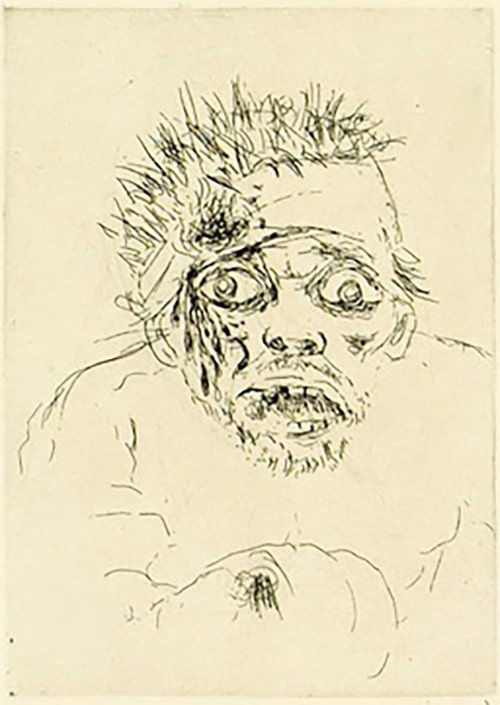
Wounded man fleeing.
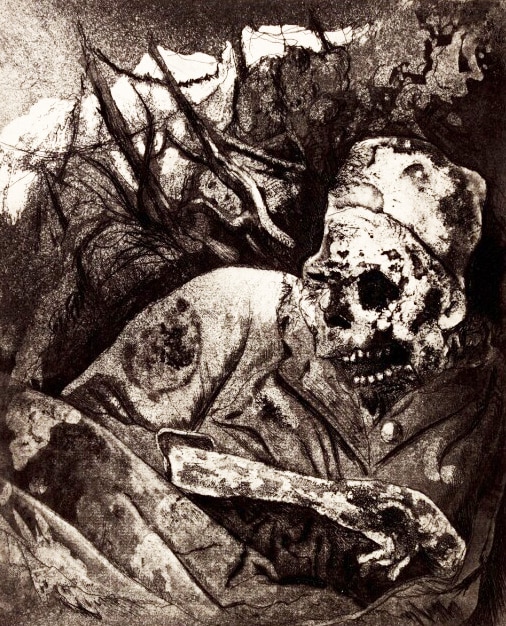
Corpse in barbed wire.
Goya and Callot recorded the horrors of war as observers but Dix lived through the mud, blood and screaming bombardments as an active participant and as a victim of the criminal, lunatic folly of politicians and military strategists.
He wrote in his diary:
‘Lice, rats, barbed wire, fleas, shells, bombs, underground caves, corpses, blood, liquor, mice, cats, gas, artillery, filth, bullets, mortars, fire, steel: that is what war is! It is all the work of the Devil!’
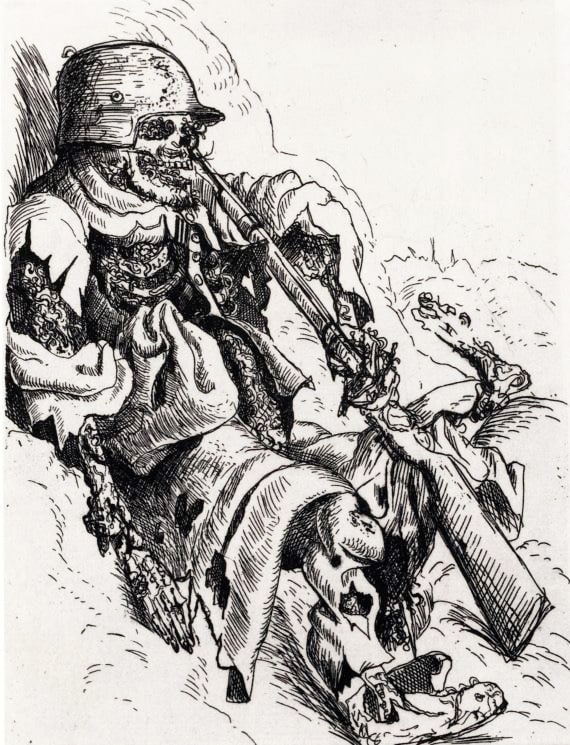
Dead Sentry in the Trench.
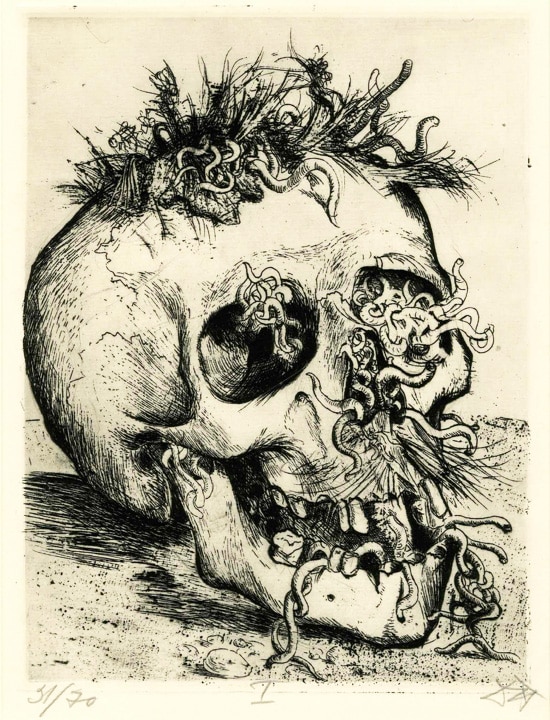
Skull
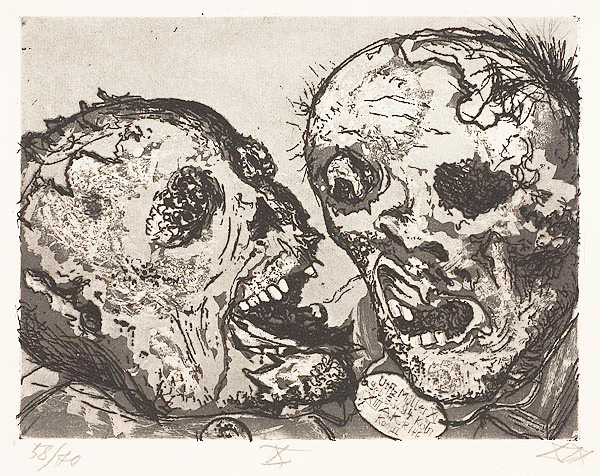
Dead Men Before the Position near Tahure.
Along with the geopolitical machinations leading to the decent into war, there also existed the forceful desire for change, current at the time, especially among younger generations in Europe, who despised the hypocrisy, oppression and stifling inertia of the aging regimes, and saw in war a chance to do away with the old order.
Otto von Glerke, head of the Berlin school of German law, claimed:
‘…the just war does not only kill, it also creates. It destroys, but it also calls new values into being. The greatest enemy of culture is also the mightiest begetter.’
The Italian Futurists saw dynamism and regeneration in war which Marinetti described as ‘the world’s only hygiene.’ Needless to say, these sentiments did not survive for long among the young men thrust into the trenches. Shattered minds and bodies, disease and death were the realities that greeted them.
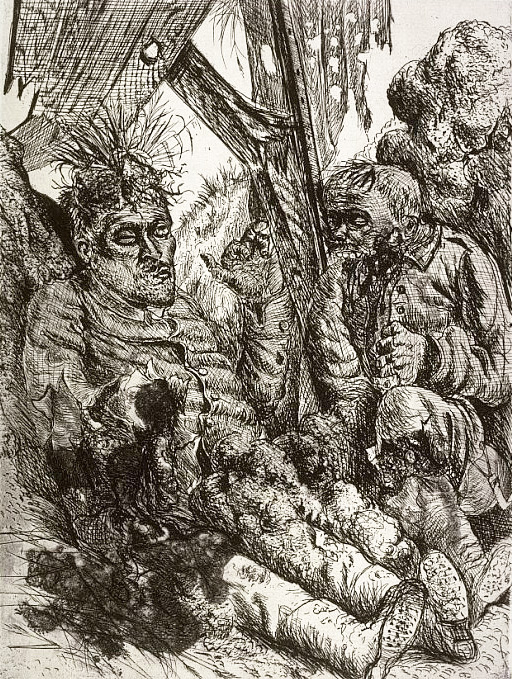
Seen on the Escarpment near Cléry-sur-Somme.
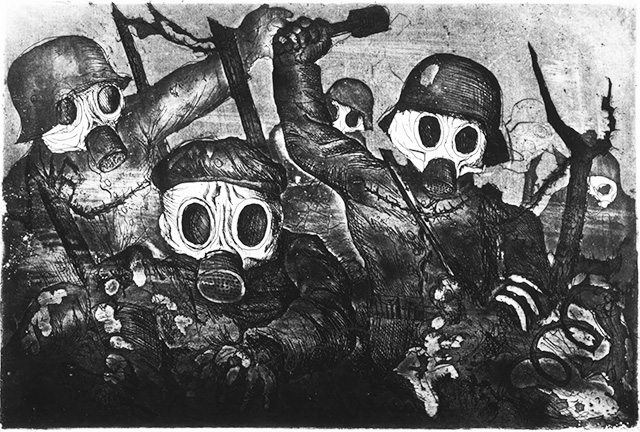
Shock Troops Advance under Gas.
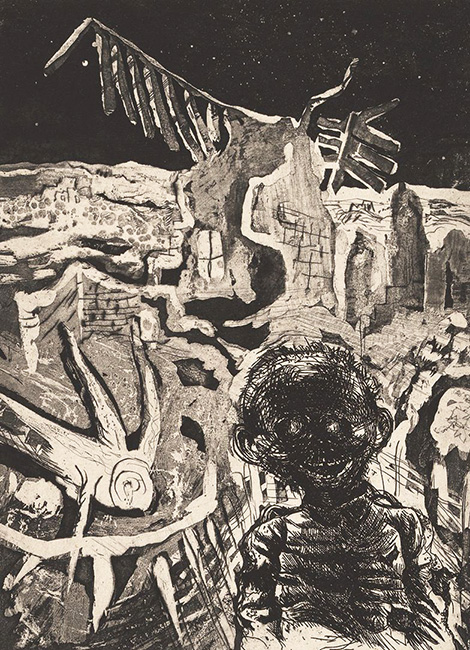
Nocturnal Encounter with a Lunatic.
Dix’s artistic vision was already developed by his late teens and early twenties and was perfectly suited to depict the elemental nature of warfare.
His earlier work was highly charged, physical, intense, inquisitive and exploring in its nature, confronting his subjects full on.
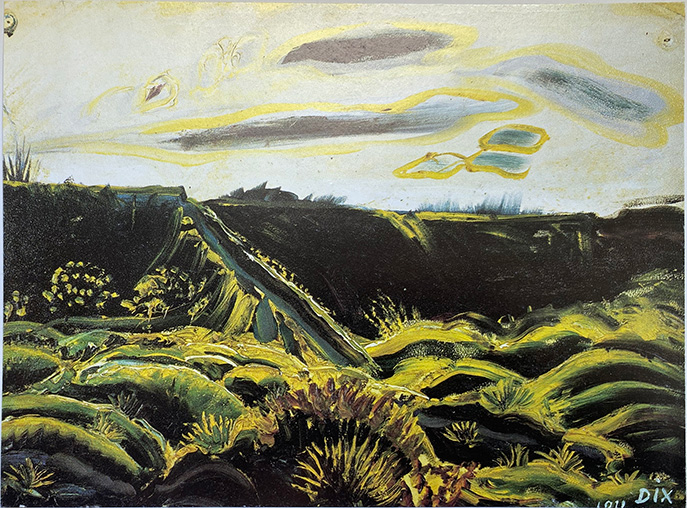
Railway Embankment. 1911.
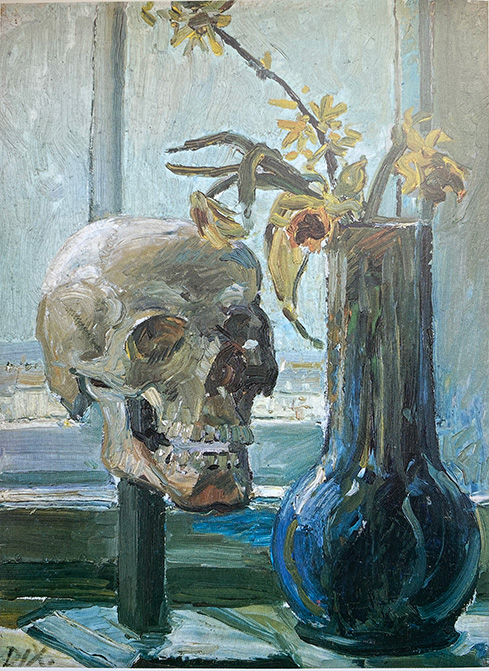
Flower and Decay. 1911.
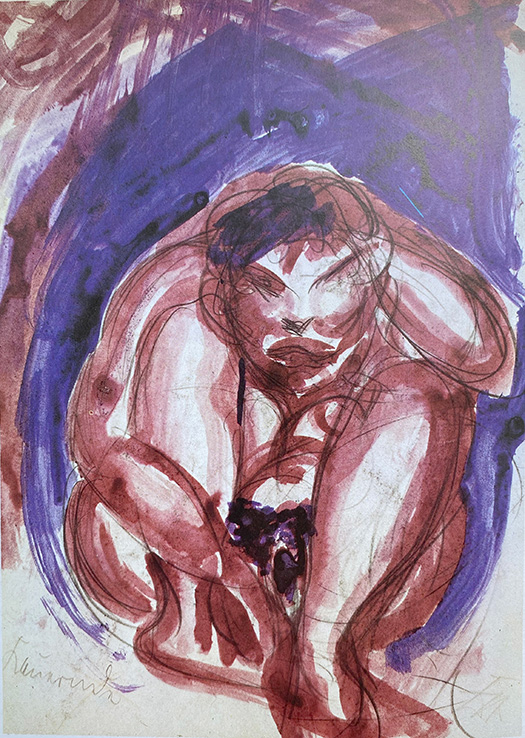
Woman Squatting. 1913.
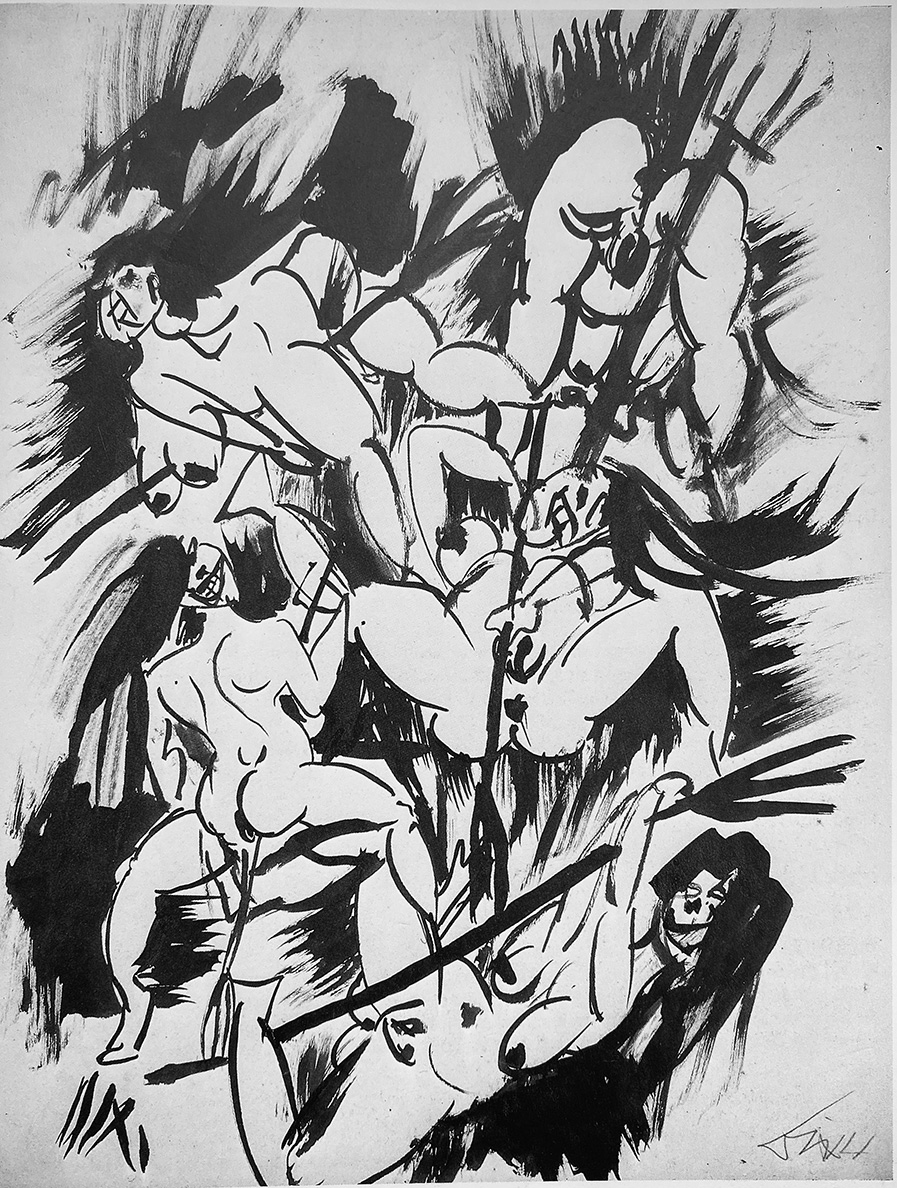
Walpurgis Night. 1914.
Even before he entered the nightmare of trench warfare, he was exploring the closeness of life with death, more particularly Eros and Death, a theme that was central to his work throughout, although before the war it was more a celebration of life through an immersion in all that life embodied. His attitude was:
‘One has to say ‘yes’ to humanity as it is and always will be. In exceptional situations, people can behave in the very noblest of ways, but their behaviour can also be degraded and bestial’
It’s not surprising that he studied, as many at the time did, the philosophy of Friedrich Nietzsche, accepting that the world was ‘a monster of force’, and, unsurprisingly, nihilism underpinned much of post war artistic reaction to society.
Dix was, first and foremost, an artist who brought his own, unique vision to bear on his subjects. Although he has been associated with Expressionism, the Neue Sachlichkeit movement (roughly meaning New Objectivity) and 1920’s Magic Realism, it is impossible to constrain him to any particular movement even though his work is undoubtedly a central representation of his life and times. He was a deeply sensitive individual yet spiritually and mentally robust. Above all, he had an exceptional ability to immerse himself utterly and completely, not only in his work but in all the experiences that life could offer.
Of the war years, he later remarked:
“These were all things that I simply had to experience. The experience of someone falling down next to me, dead, with a bullet straight through him…..perhaps I was an inquisitive person…..I am such a realist that I have to see everything with my own eyes to make sure that it is really like that.”
“The war was a dreadful thing but there was something awe inspiring about it. There was no question of me missing out on that! You have to have seen people out of control in that way to know anything about man”
And in his wartime diaries he wrote, “war, too, must be a manifestation of nature.”
This commitment to experience, to confronting the subject without compromise, an almost self-sacrificial act of perception and understanding, gives the Der Krieg series their extraordinary power to place us in the trenches alongside the agonies of the dying soldiers. And yet, Dix was also the observer, recording meticulously the details of wounds and grotesque deformities. All great art has, at its core, a deep power of observation, and Dix was firmly committed to this fundamental.
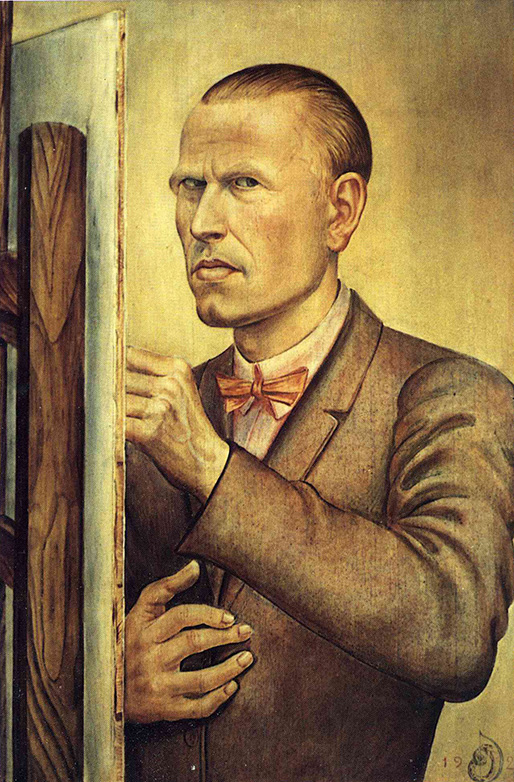
Self Portrait with Easel. 1926
“For me, at any rate, the main thing is the object,” he remarked.
On portraiture, he made this statement:
“Seeing is the basis of a good portrait. A person’s appearance is always an expression of character; the exterior expresses the interior; in fact, the outside and the inside are identical. This means that even the folds in a person’s clothing, his posture, his hands, his ears, all tell the painter something about his subject’s psychology. The ears are often more revealing than the eyes or the mouth.”
I can imagine that Dix’s practice of observation, which places an artist in something of a removed mental space, and his strength of purpose in his art, might have, to some degree, carried him through his time as a front line soldier. He kept a diary filled with sketches and observations and sent a total of 48 postcards of drawings from the front, but the Der Krieg etchings were, in fact, created in 1924, six years after the war’s end.
“I wanted to get it out of my system!” he replied when interviewed.
“…it is like this. You do not notice, as a young man, you do not notice it at all, that it is getting to you, inside. For years, for a good ten years, I had these dreams, in which I had to crawl through ruined houses with passageways I could hardly squeeze through. I dreamt continuously about rubble and ruins. Not that painting provided any sort of release, mind you!”
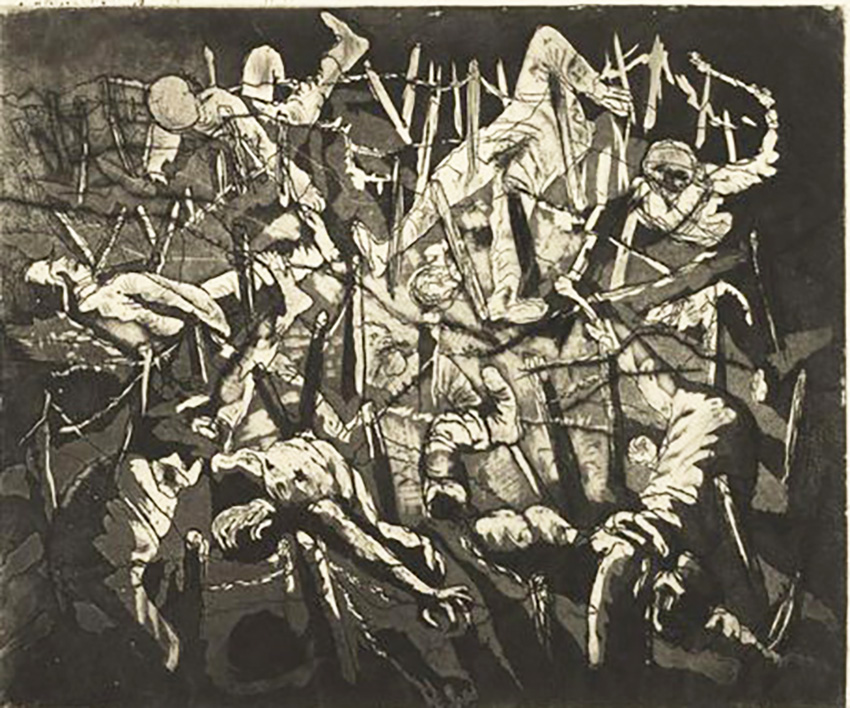
Dance of Death.
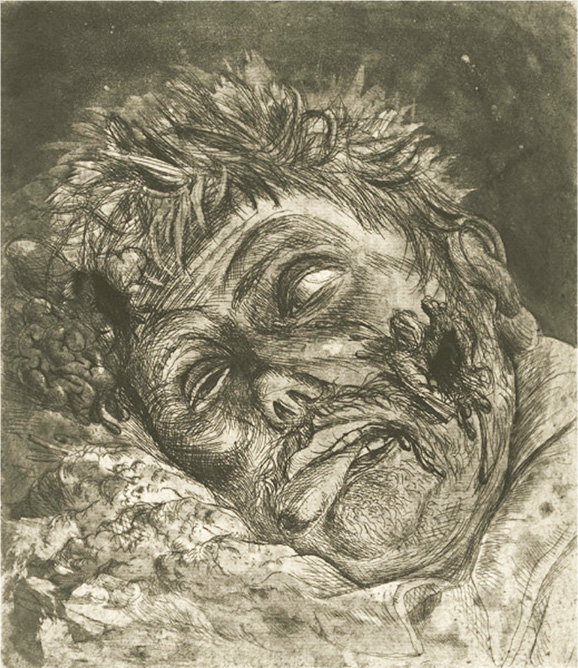
Dead Man. (St Clement).
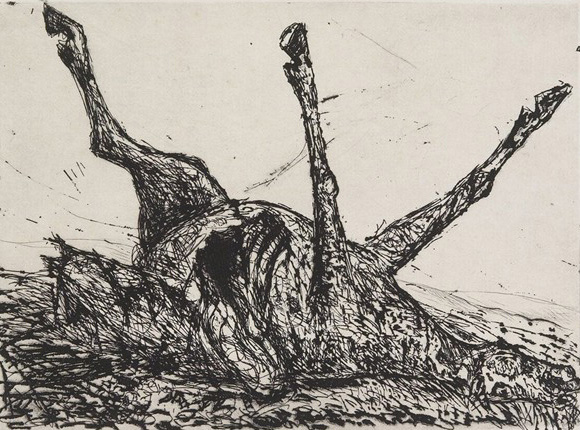
Horse Cadaver.
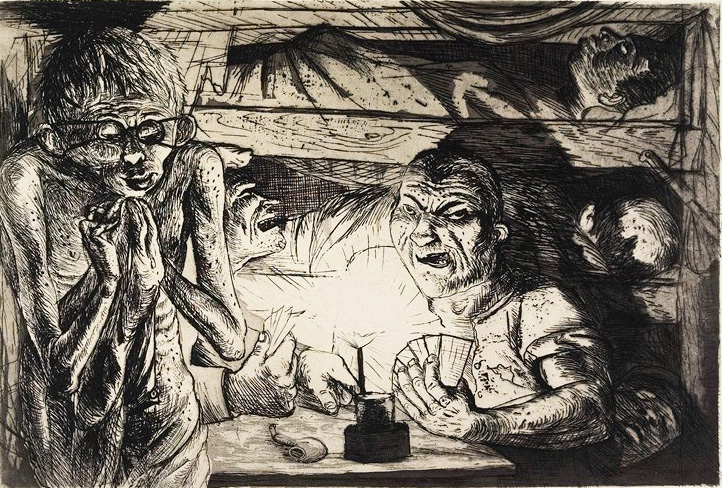
Foxhole. (Unterstand)
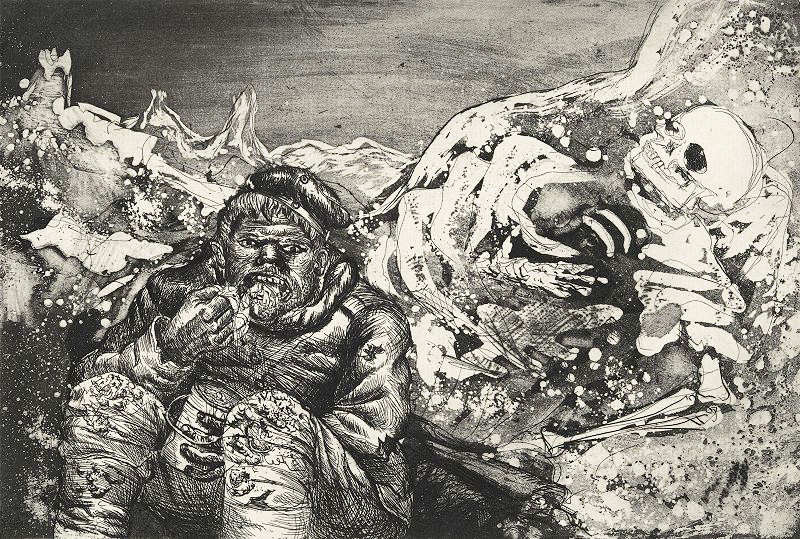
Mealtime in the Trench.
It is hard to think of a more tragic example of the desperate myopia of nations going to war than the trenches of WW1. What began as a temporary, defensive field tactic turned into a continuous graveyard stretching from the Swiss border to the English Channel.
Nobody anticipated the effect of new technologies on the outdated ideas of swift offensive battlefield victories, least of all the four million young men who died on the Western Front, thrown, like Otto Dix, into a nightmare beyond anything they had experienced in their short lives.
It should be noted, of course, that our deluded ‘leaders’ learn nothing. The implacable warmongers in Moscow thought Kyiv would be overrun in a few days and, after three years, are still piling bodies into the meat grinder of Eastern Ukraine, bogged down by the new technology of drone warfare. One million Russian casualties and counting.
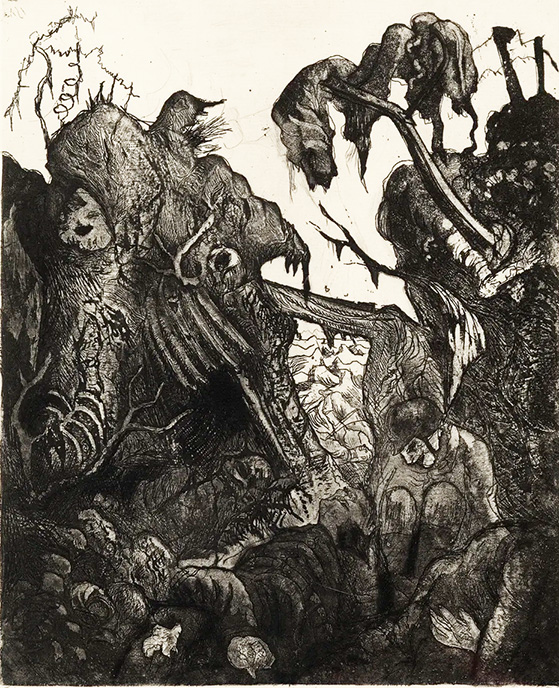
Disintegrating Trench.
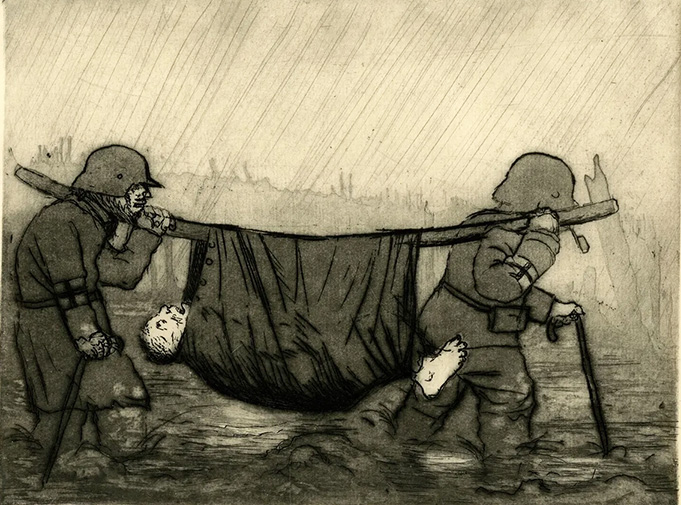
Transporting the Wounded in Houthultst Forest.
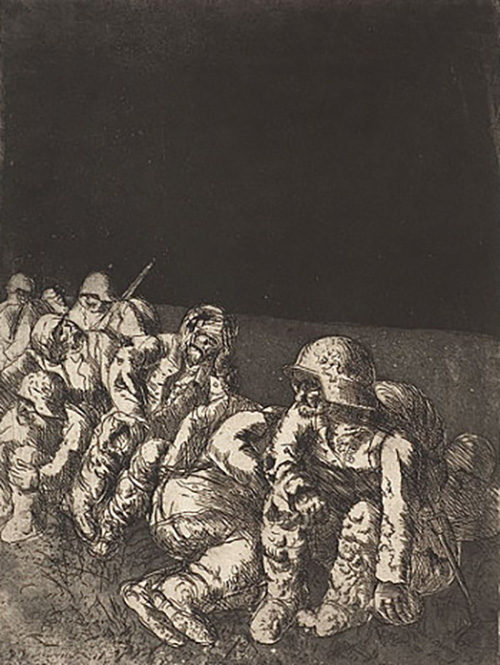
Company Resting
The great gulf between the politicians who have never so much as grazed a knee in any form of combat, and the ordinary men fighting each other, separated by a few yards of mud, brothers in a desperate, other world struggle of kill or be killed, is a surreal tragedy that seems to repeat itself through all of history. Theirs is a dimension of consciousness far removed from our normal experience that only those who have lived it can understand, and it is little wonder that so many veterans of wars cannot rehabilitate themselves to the domestic normality of peacetime habits.
One of the great strengths of Dix’s art is his acknowledgment of the complex nature of the human psyche. He understood that fear and hatred, love and kindness, lust and tenderness, all exist in a psychological powder keg with varying lengths of fuse. Others, of course, understand all too well how to light the fuses and trigger the emotions that allow us to be herded into tramping armies of aggression.
It’s true that he was fascinated with the darker drives, perhaps because they are hidden from sight in society and not confronted. Being able to take on these disturbing truths without compromise gave him a unique ability to reveal things that we prefer to turn away from. It may not be for the squeamish but ignorance of the realities of war is what makes war possible. The hard photographic evidence that was relayed into American homes from reporters on the ground in Vietnam certainly helped to hasten the end of that war. Not something that was allowed to happen again.
After 1918, Dix continued to apply his uncompromising eye to the post war society of the early Weimar Republic, shaped by the crushing terms exacted by the Treaty of Versailles and the traumatised lives of the survivors. The city life that he returned to was another theatre of extreme sensation and excess.
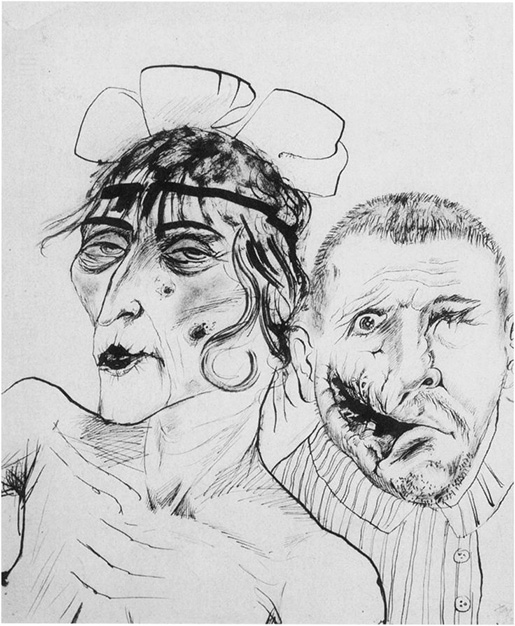
Whore with War Cripple. 1923.
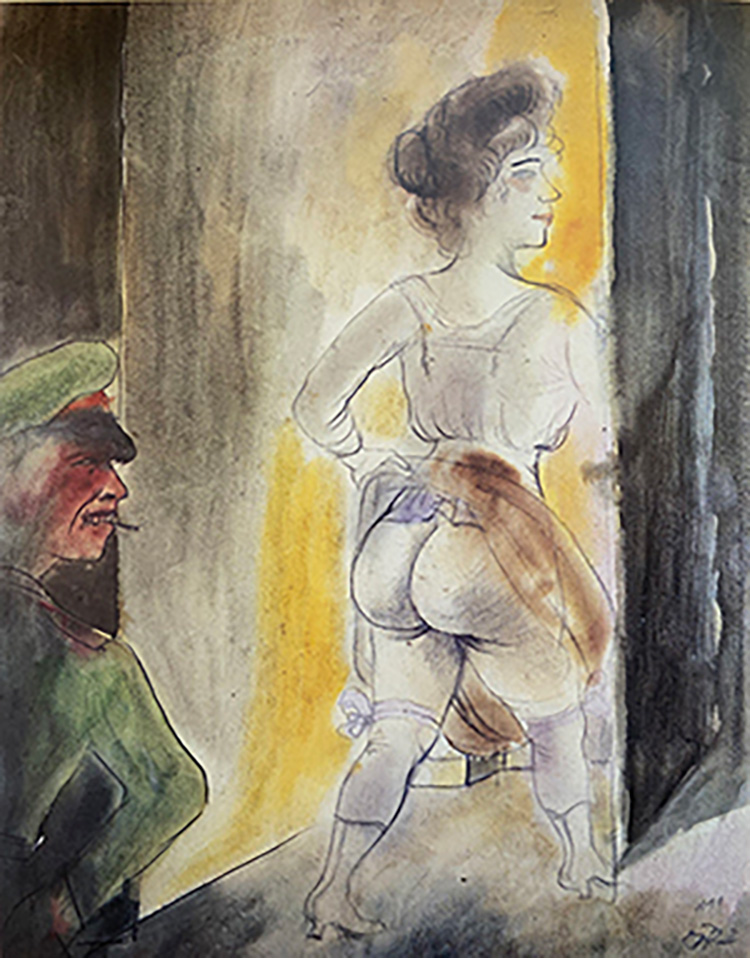
Myself in Brussels. 1922.
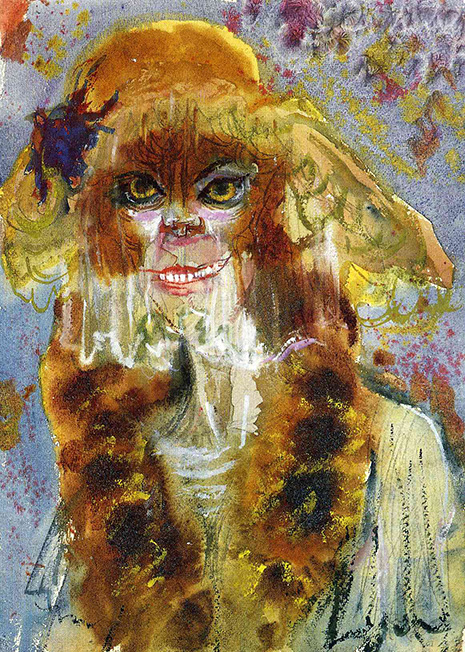
Ellis. 1922.
Dix again exploited his taste for the grotesque and his insistence that ugliness was part of reality. Not many artists before him had been able or willing to delve so deeply into the darker states of the human mind. His ‘Sex Murder’ engraving from the series, Death and Ressurection (omitted here for the sake of decorum) has a naked, aging prostitute laying savagely murdered on a bed while two dogs copulate alongside. The Der Krieg engravings were deadly serious but the post war depictions of Weimar society were laced with hilarious comedy. Humour of juxtaposition and contradiction, heightened by the lurid world of post war Germany, was very much a part of Dix’s vision.
He, himself, was a man of high energy and personality; charming, seductive, with slicked back hair, American suits and a passion for dancing the shimmy. His appetite for life gives his work an intensity perfectly suited to the febrile world he inhabited.
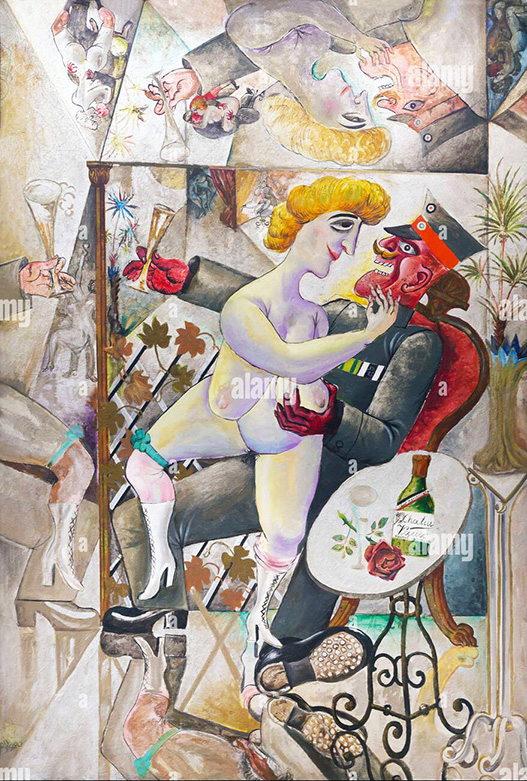
Souvenir of Mirrored Halls in Brussels. 1920.
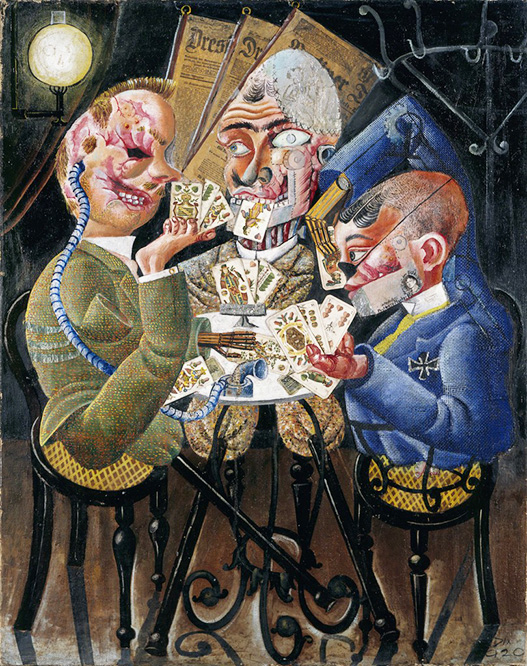
The Cardplayers. 1920.
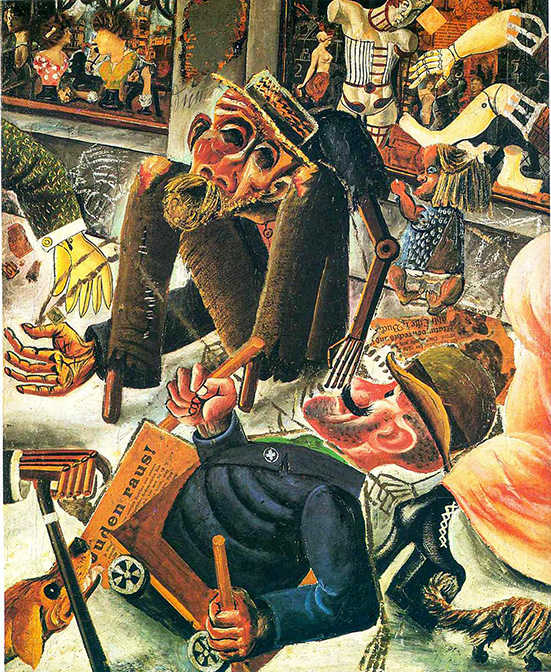
Prager Strasse. 1920.
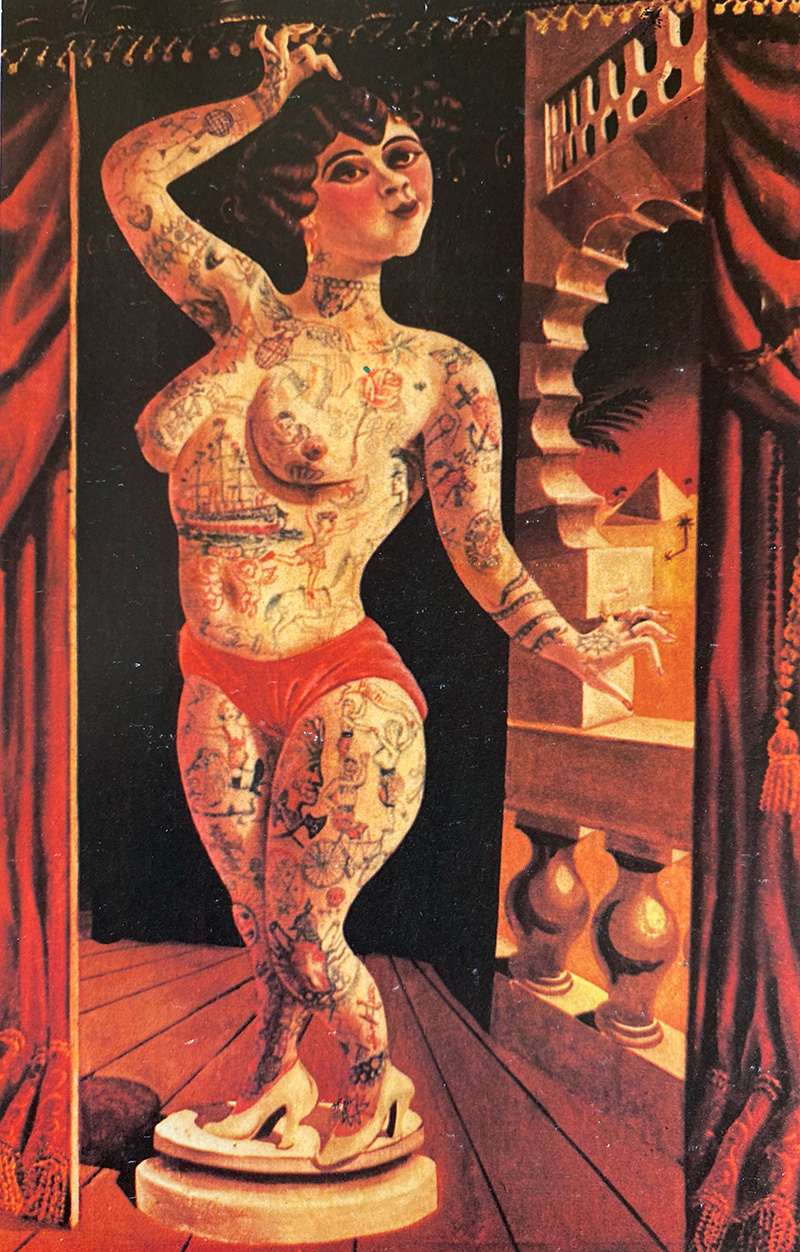
Zuleika. The Tattooed Wonder. 1920.
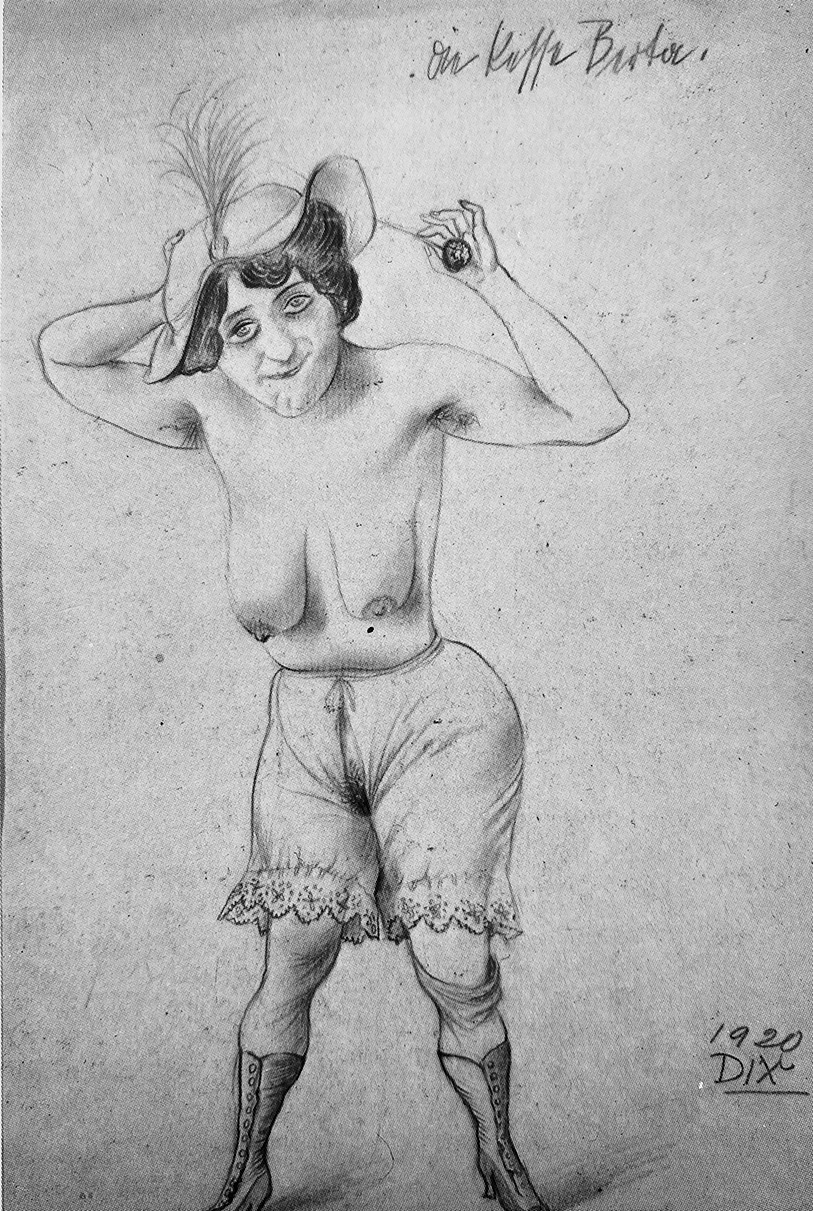
Saucy Berta. 1920.
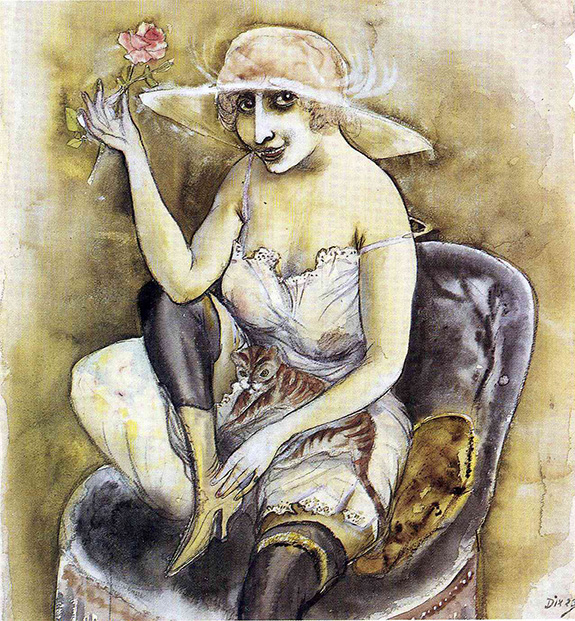
Girl with Rose. 1923.
During the1920’s Dix also produced some of the iconic works which place him among the greats of portraiture.
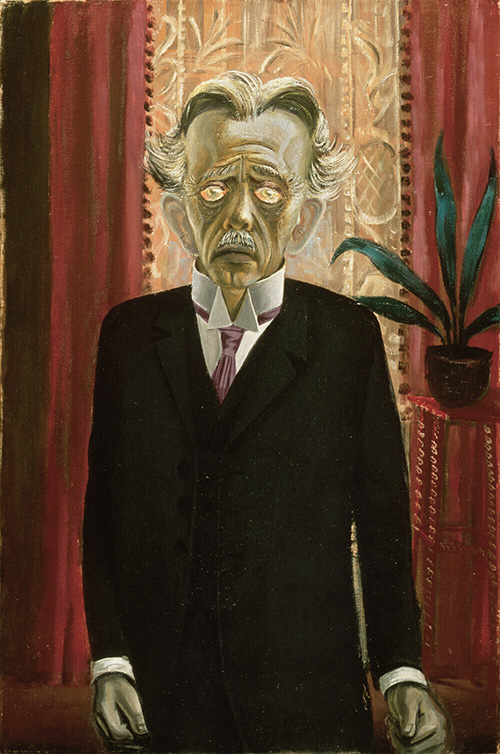
Dr Heinrich Stadelmann. 1922.
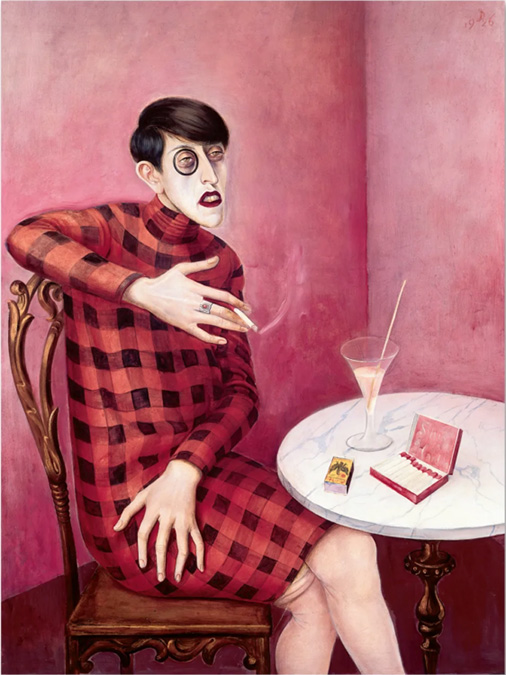
The Journalist, Sylvia von Harden. 1926.
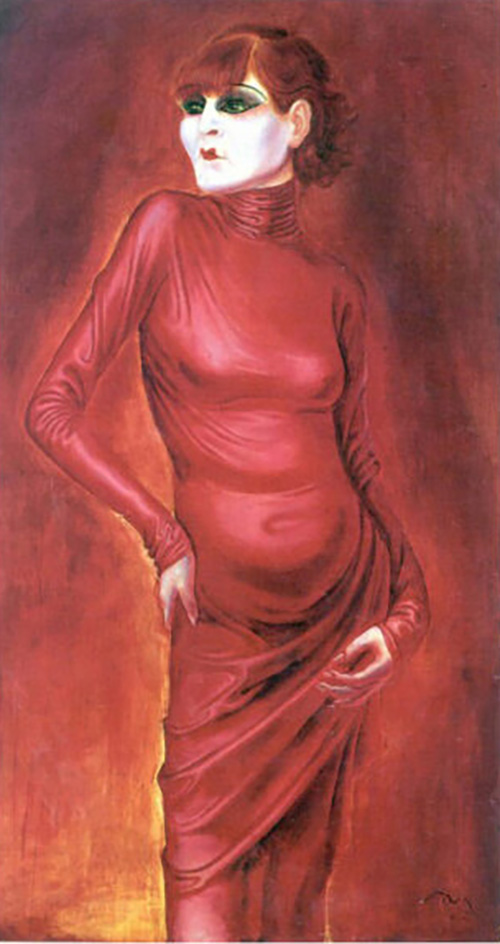
The Dancer, Anita Berber. 1925.
His method for portraiture involved working up an exact drawing of his subject which he then transferred to the canvas. At that point he was finished with the model and, as he said, “then came the really important part: painting without the subject”. Freed from the distraction of observation he could allow his powers of psychological insight to go to work. The end results were powerful realisations of character as mediated by his acute mind.
Dix later returned to the war with two large works, War (Triptych with Predella) 1929 – 1932, and Battlefield in Flanders, 1934 – 1936.
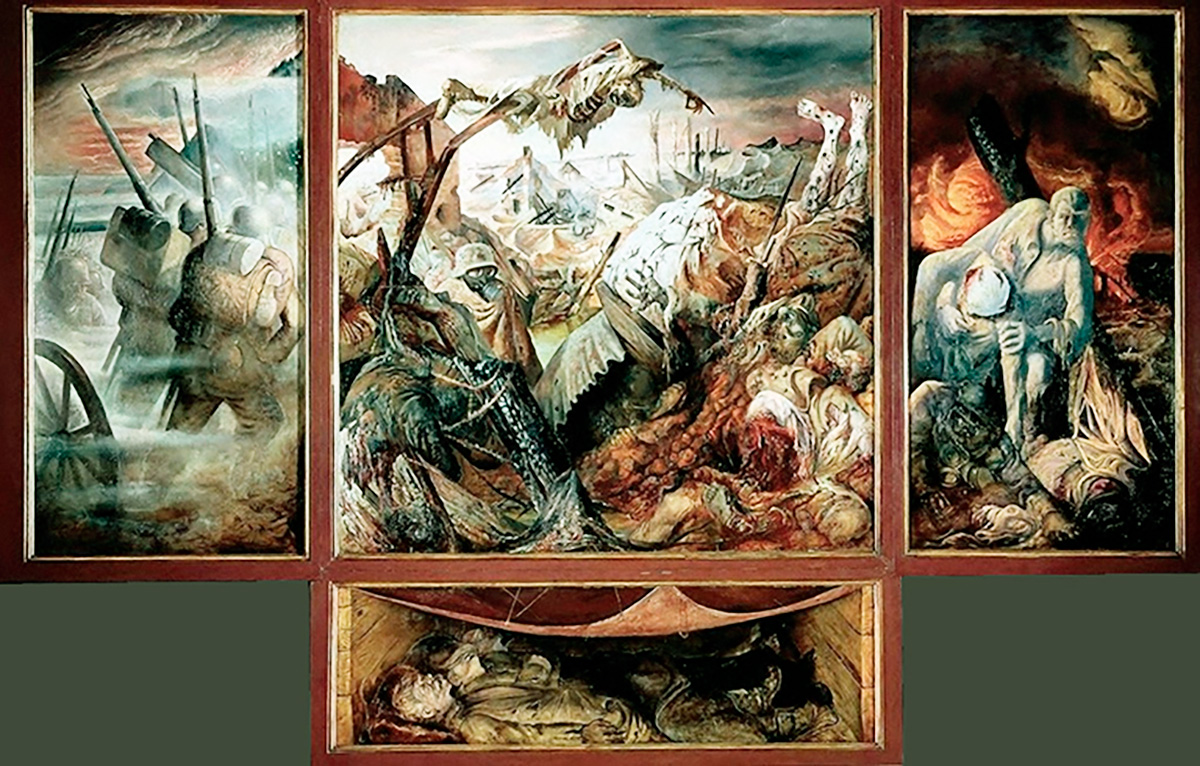
War. (Triptych with Predella). 1929 – 1932.
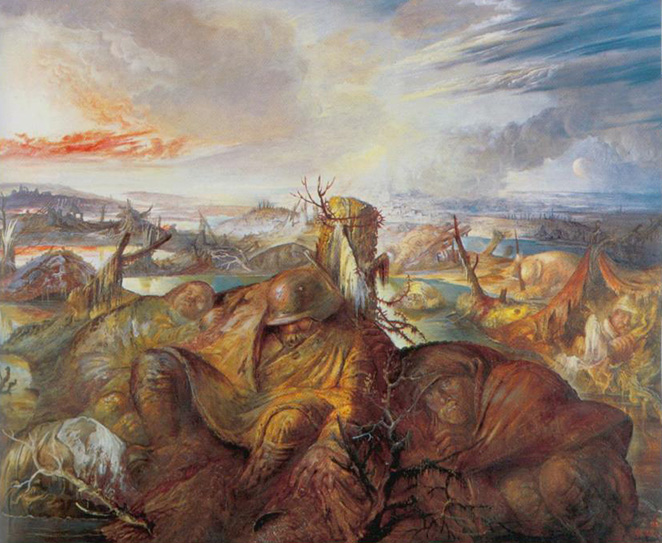
Battlefield in Flanders. 1934 – 1936
These are apocalyptic paintings that appear to encompass Dix’s entire vision of the terrible devastation inflicted on the world by the events of 1914 to 1918. The triptych, painted on wooden panels, is in the form of a medieval altarpiece, connecting the religious crucifixion with the agony of the soldiers of WW1.
He explained that, when he created the work “there were a lot of books circulating in the Weimar Republic, promoting a notion of heroism which, in the trenches, had long since been rejected as an absurdity. People were already beginning to forget the terrible suffering that the war had caused. This was the situation in which I painted the triptych.”
In 1933 Hitler seized power and the cultural storm troopers of the Nazi dictatorship decided, predictably, that the work of Otto Dix had offended the moral sensibilities of the German people and undermined the nation’s morale. He was summarily dismissed from his post at the Dresden Academy of Arts without even being allowed to enter the building to collect his paintings. In 1934 he was banned from exhibiting and two hundred and sixty of his paintings confiscated from various collections.
Thereafter, he was, as he put it “banished into landscape painting”.
“It does not interest me very much. It is people, people I am interested in”.
Nevertheless, as an example of his skill:
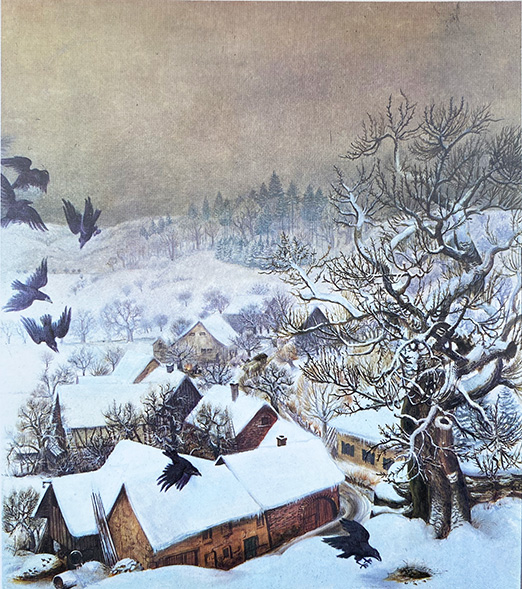
Randeg in Snow with Crows, 1935.
The other great artist of the Weimar Republic, Max Beckmann, took a different course. Like Dix, Beckmann had served in the war before being invalided out after a mental breakdown. Beckmann also documented the horrors of the time with a series of lithographs including the series, ‘Hell’, and large works including ‘Night’ that are equally hard-hitting.
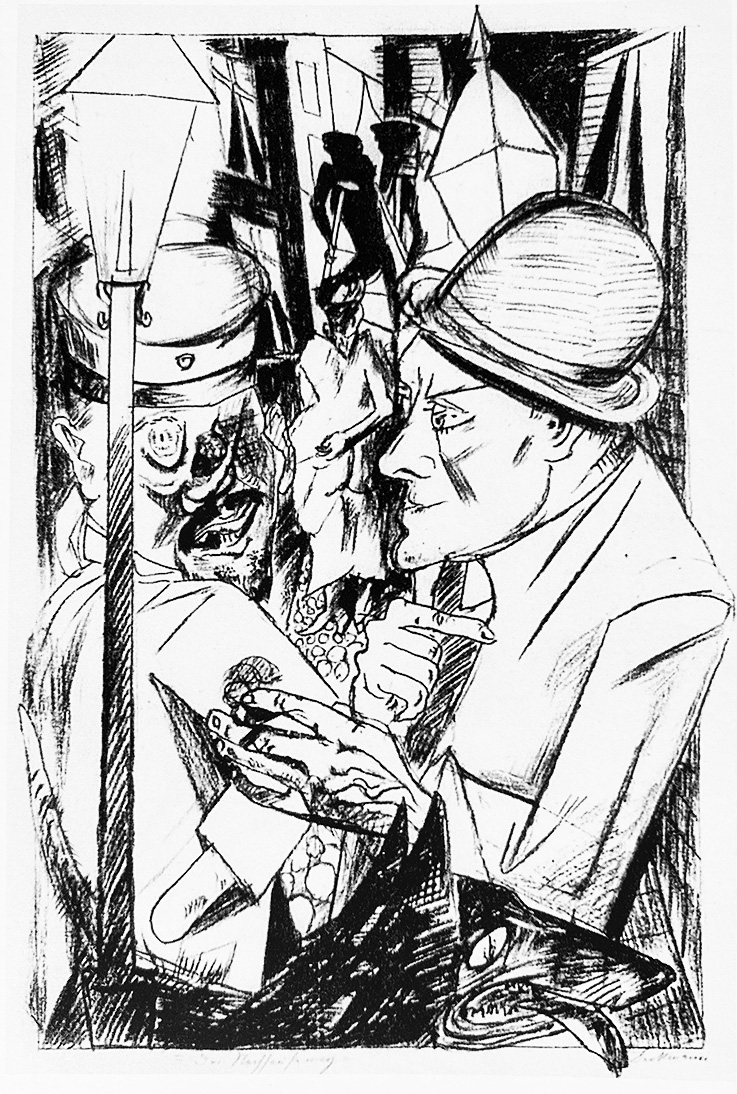
The Way Home, from the series, Hell. 1919.
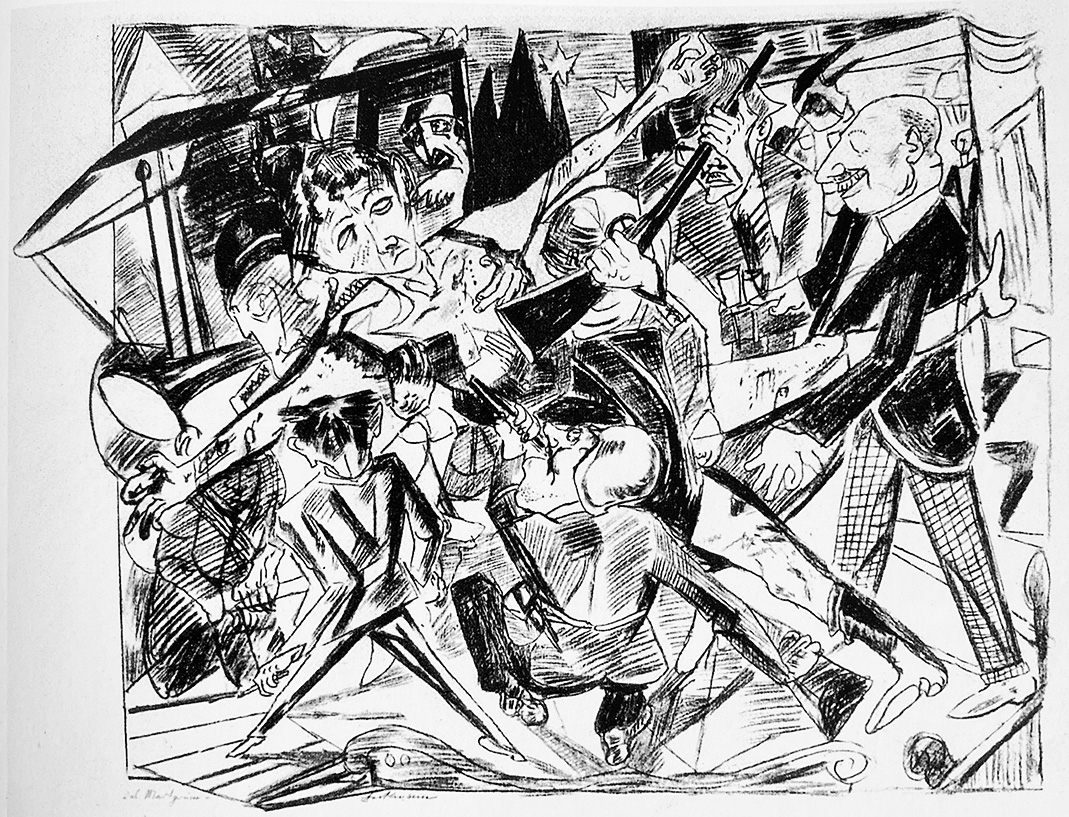
Martyrdom, from the series, Hell. 1919.
(Murder of Rosa Luxembourg).
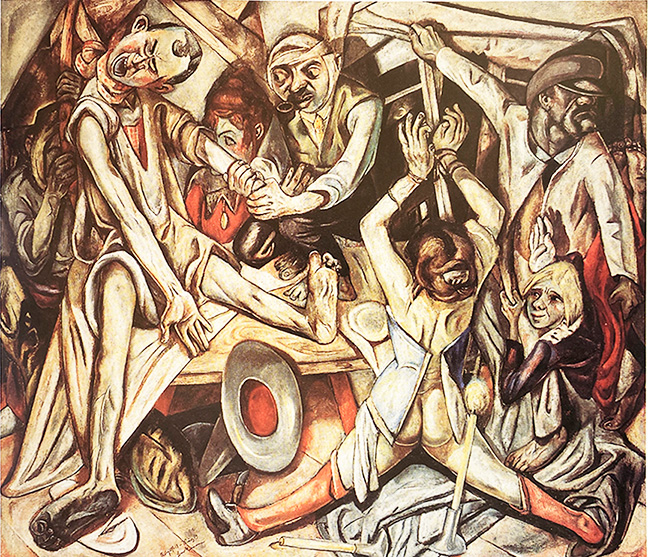
The Night. 1918 – 1919.
However, after Hitler’s speech of 1937 and the infamous Degenerate Art Exhibition, Beckmann fled to Amsterdam with his second wife, Quappi, taking only a couple of suitcases to avoid suspicion, and was forced to remain there in isolation for the duration.
Beckmann’s subsequent response was to create a new artistic vision through which he hoped to offer a kind of redemption to his fellow man, as well, it seems, as a healing process for himself, and he went on to produce profoundly thoughtful and iconic works that delved into the subconscious using universal, mythological themes. His many self portraits are some of the most mysterious and thought provoking works.
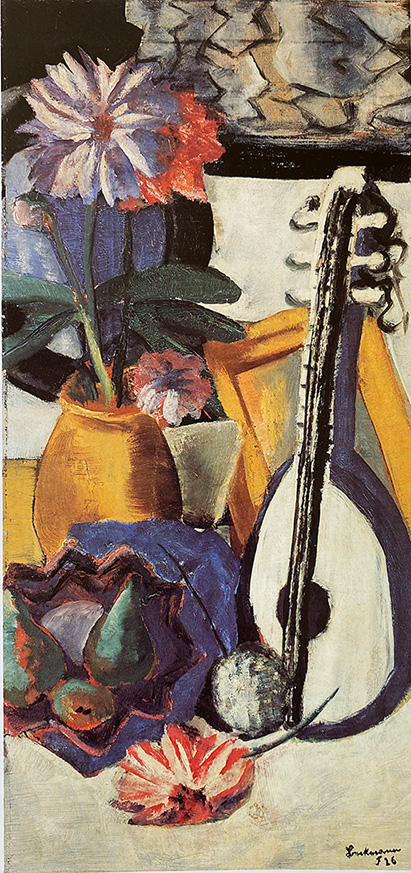
Still Life with Violet Dahlias. 1926.
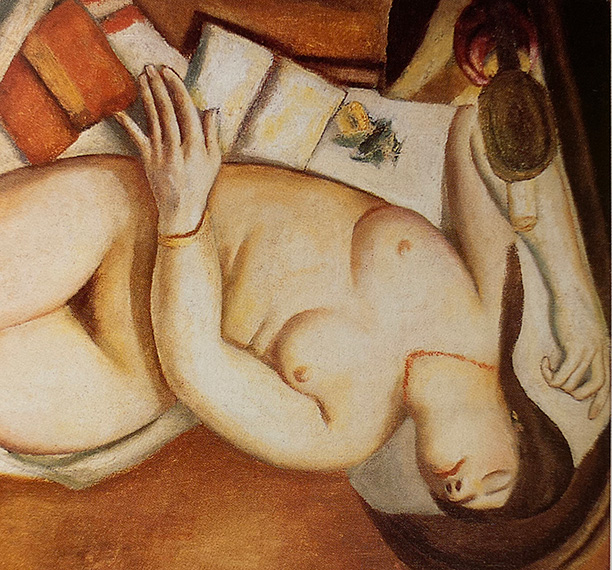
Sleeping Woman. 1924.
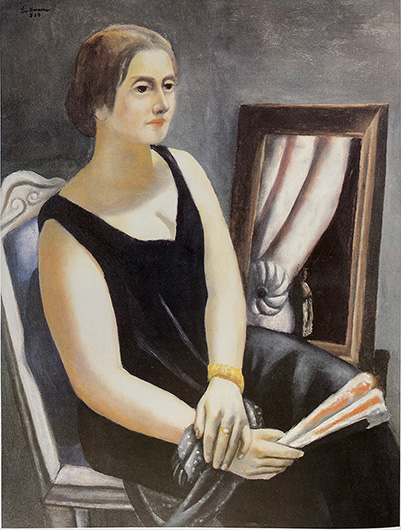
Portrait of Minna Beckmann-Tube. 1924.
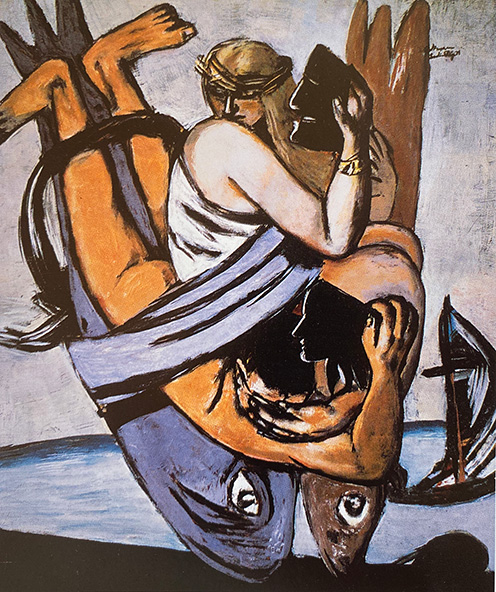
Journey on the Fish. 1934
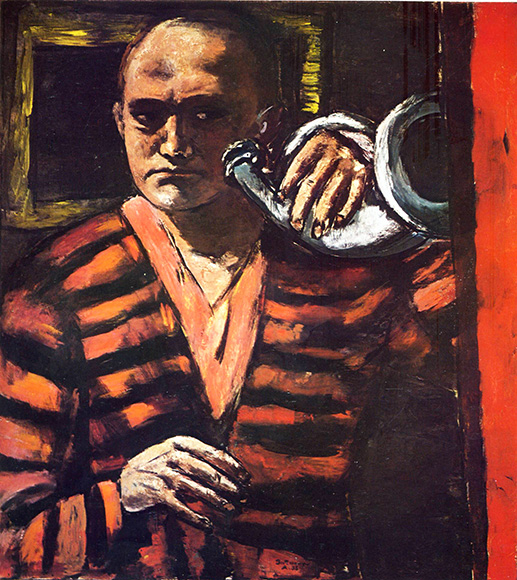
Self Portrait with Horn. 1938.
It is an interesting question, how to deal with a trauma as profound as that experienced by these two artists. Both had looked into the abyss where mankind is lost, our identity as human beings called into question, and a loneliness of the soul becomes overbearing. Otto Dix, with his enormous resilience, continued to survive within himself, Beckmann eventually escaped to America and seemed to immerse himself in the deep search for self and the exploration of his art form.
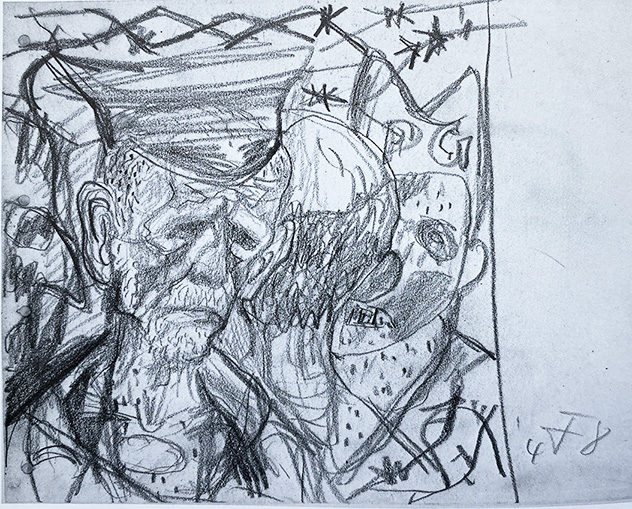
Self Portrait as Prisoner of War (sketch for painting). 1947
Ironically, in 1945, Otto Dix found himself conscripted into the Volkssturm, the desperate last ditch home guard meant to defend the remnants of the Reich, and, after the capitulation, he was interned for eighteen months in a prisoner of war camp
Dix’s final word on war is his great mural, commissioned in 1960, for the council chamber of the town hall in Singen measuring 36 feet by 15 feet which he described as “a synthesis of everything I have been trying all my life to do in my art”.
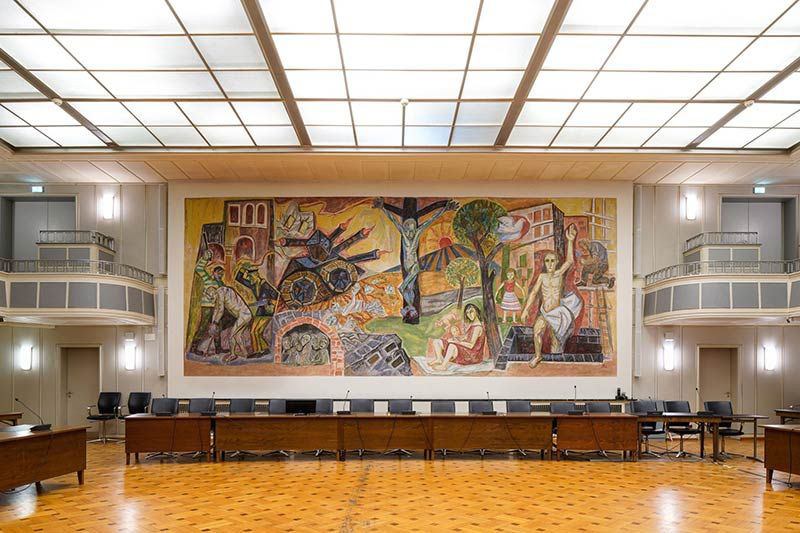
Detail. Click to expand.
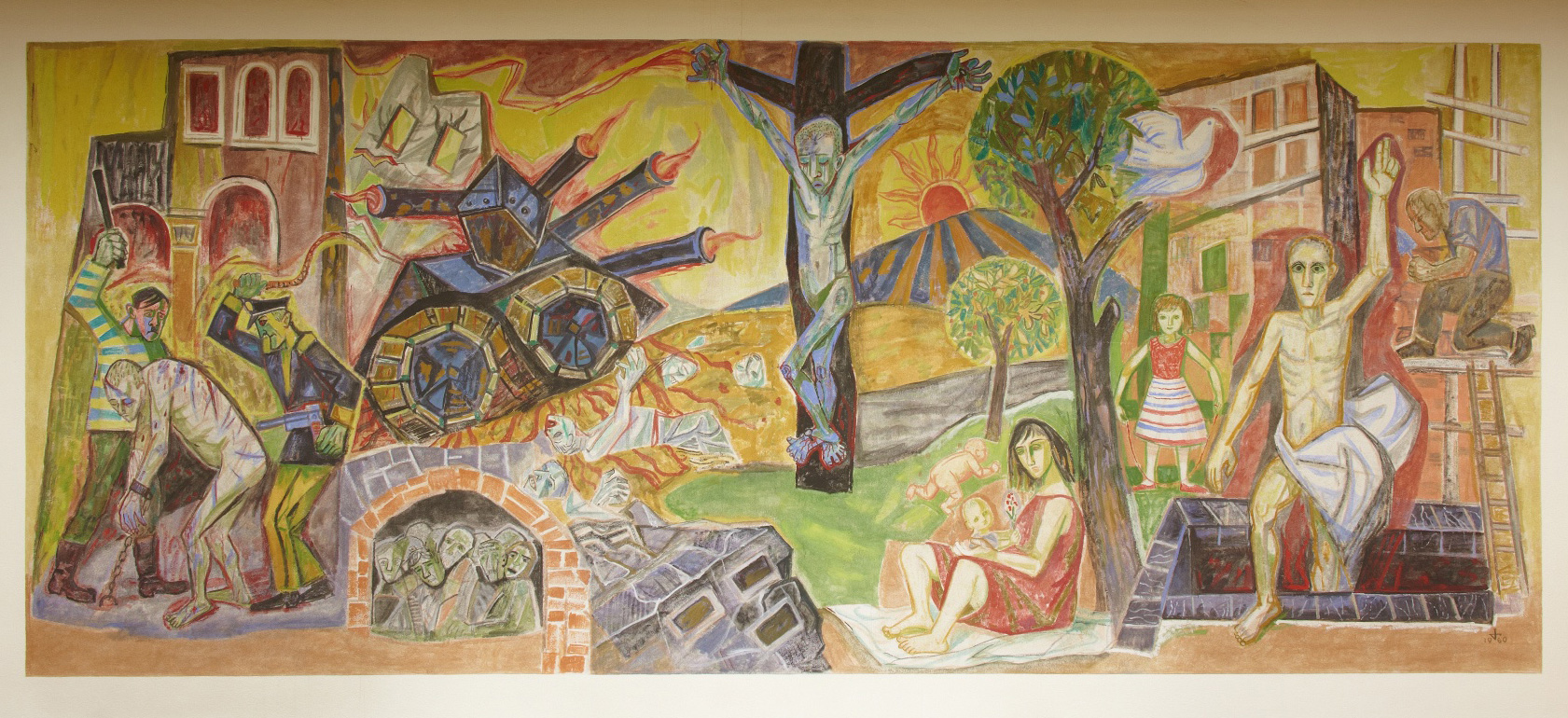
We should be grateful that Otto Dix had the artistic and mental resources to give to the world the truth about the realities of war, and, in doing so, lay bare the insufferable cowardice and hypocrisy of politicians, demagogues and media cheer leaders so eager to send others to their death.
There is, of course, a great wealth of documentation showing
war in all its aspects but, for my mind, Dix’s work takes us to a
point of confrontation where it is possible to have some
understanding of the deep, internal experience, only possible
through the vision of an exceptional, individual artist.
I also think this ability to give us a sense of the intense, lived experience is characteristic of much German art. Wolfgang Petersen’s 1981 film, Das Boot, was an unforgettably claustrophobic journey through WW2 in a U Boat with the brilliant Jurgen Prochnow as the cynical, Nazi-hating commander. We know the men intimately, as characters with whom we share a common humanity.
Edgar Reitz’s epic series, Heimat, beginning with a soldier returning from WW1, takes us deep into the lives of the various members of the community over several generations and manages to leave us with a haunting sense of time and place and the effects of events on individuals’ lives. Even Douglas Sirk’s Hollywood films, exploiting his idea of ‘swollen emotion’, give us a sense of elevated being. Much more, of course, but the sense of vivid, human experience that we can feel seems to me to be art of the highest quality.
I wonder what Otto Dix would make of the world today? Deep sadness, I suspect, with, perhaps, a fatalistic recognition of what he always knew about human behaviour, as fascism makes its hated entry once more onto the stage. My own father parachuted from an aircraft over occupied France in 1944 to fight fascism and strive for a better world, and my generation, blessed by the subsequent years of peace in Western Europe, now watch the liberal society we took for granted under threat again by the same thinking that gave us Adolph Hitler.
The sudden shock of being wrenched back into the past by tanks rolling across Eastern Europe and bombs suddenly raining down on ordinary modern families going about their modern lives in 21st century Ukrainian cities was a world changing trauma in 2022, but now, in 2025, we find ourselves transported even further back to a medieval world where a pitiless slaughter is inflicted on Palestinian civilians, live streamed before our helpless eyes. Perhaps our bread and circuses will be enough to sustain us here in the West, and even fortify us against savage atrocities being endured in parallel universes just next door.
Daniel Barenboim, a man who has done so much to unite people through the blessing of music, spoke of a deeply troubling thought that he turned over many times in his mind: that Hitler would emerge from a Wagner concert in tears at the beauty of the music, and, the next day, order the gassing of Jews in concentration camps. However, it is not necessary to refer to the horrors of past wars to be confounded by human behaviour. I often wonder how it is that nice, middle class family men and women, some of them Christians, can sit in our parliaments and vote to bomb women and children in far off countries.
I think Otto Dix probably came nearest to the truth. He understood the vulnerability of our fragile imaginations, our easily stoked fears, our need for simple answers, the intoxicating attraction of power over others and the ease with which we adopt delusional thinking, driven along by the ruthless and the unscrupulous with leverage over us.
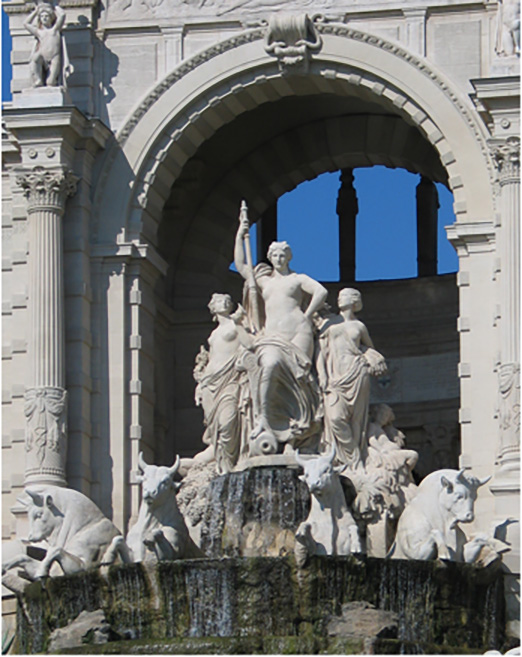
In 2013 we were at the Marseille Jazz Festival. It was staged at the Palais de Longchamps, a gloriously over-the-top piece of French neo-classicism featuring three preposterously erotic and heroically proportioned women atop a quartet of prancing bulls. Their job was to proclaim the bringing of fresh water to the hitherto cholera afflicted city of Marseille.
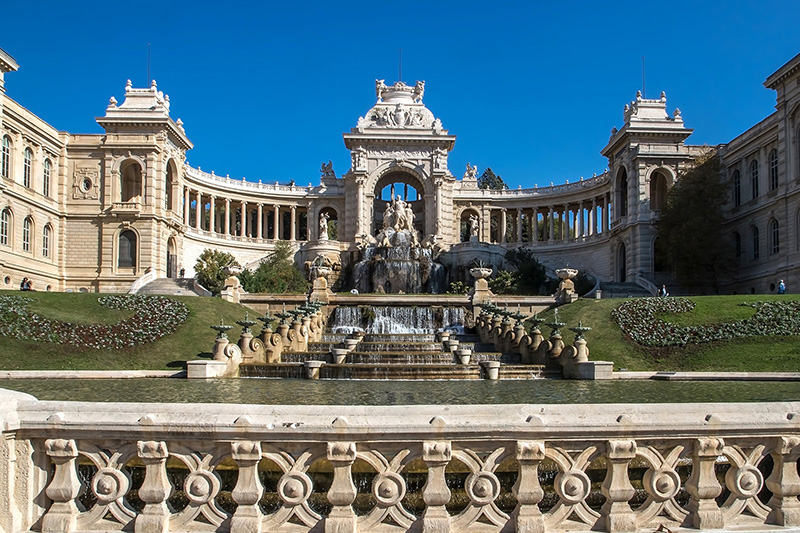
The concert itself featured a line up of some of the greatest musicians in the world including Hugh Masekela. A man who had endured with dignity thirty years of exile from his homeland due to the barbarism of apartheid, he was still bringing the sublime joy of his music to a (gratifyingly young) audience at the age of seventy three. From time to time he would throw out observations from the stage, as it were to the world at large. At one point he lowered his trumpet from his lips and said, “for God’s sake, stop fighting”.
There’s not much more to add. It’s a simple message to humanity, spoken by a man who, like Otto Dix, had experienced inhumanity.
Acknowledgment: I am indebted to the writing of Eva Karcher for information and quotes from the life of Otto Dix.